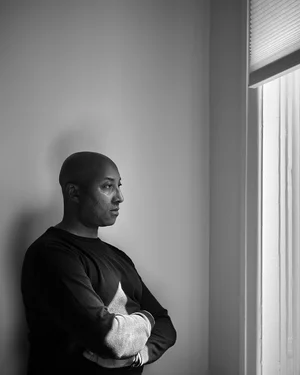
Nancy Oliver-MacKenzie’s relationship with Montréal is shaped by a lifetime of movement, teaching, community engagement and historical discovery. Born in Nova Scotia, where her family’s roots extend back generations, she arrived in Montréal in 1967. Her life has taken her from classrooms in Québec to communities in southern Africa, yet questions of identity, belonging and the connections we establish with others have remained important throughout her journey. Speaking about Union United Church, an institution deeply connected to Montréal’s Black history, she recalled: “This is where I found my place.” [1]
For Nancy, belonging is not necessarily determined by where someone was born or where they happen to live. It develops through relationships, shared experiences and the communities people create around themselves. Her connection to Union United Church reflects this understanding of place. Established as a centre of Black religious, cultural and social life, the church has provided generations of Montréalers with a space for gathering, mutual support and collective expression. Nancy’s experience suggests that the significance of such places cannot be understood through geography alone. Their meaning resides equally in the people who sustain them and the histories they carry.
Family photographs have played an important role in Nancy’s understanding of her own identity. After inheriting a family album following her mother’s death in 1991, she began investigating the histories of her ancestors, including those who escaped enslavement in the United States and established new lives in Nova Scotia. The photographs, some dating to the 1920s and 1930s, became a starting point for a deeper investigation into the experiences of previous generations. “They tell a wonderful story,” she explained in a 2021 interview. [2]
These images offered more than a visual record of relatives she had known or heard about. They raised questions about the circumstances in which people lived, the journeys they undertook and the decisions that shaped the lives of subsequent generations. Through this process, personal photographs became a way to connect individual memory with larger histories of enslavement, emancipation, migration, and Black settlement in Canada. What might initially appear to be an ordinary family album revealed connections between intimate domestic histories and events that continue to shape contemporary understandings of Black Canadian identity.
Nancy’s commitment to preserving memory extends beyond her own family. Through her involvement with Union United Church and Montréal’s Black community organisations, she has helped recover and preserve photographs, documents, and personal histories that reveal aspects of Black life often absent from official accounts of the city. These materials offer evidence of the relationships, institutions and everyday experiences through which communities have sustained themselves across generations.
She has also highlighted the contributions of women whose work within families, churches and community organisations has often received little public recognition. Their labour, often undertaken without expectation of acknowledgement, has helped establish and maintain the social networks communities depend on. In her own writing, Nancy has emphasised the continuing need to recover these histories, observing that “There are still so many untold stories.” [3]
Her interest in historical preservation raises questions about who determines which lives are remembered and which experiences become part of a city’s recognised history. Official archives and public commemorations cannot always account for the everyday practices through which people create a sense of home, establish relationships and pass knowledge between generations. Family photographs, oral histories, and community records offer other ways to understand the past, making visible experiences that might otherwise be overlooked.
Nancy’s life also complicates the idea that identity belongs to a single geographical location. Her ancestral connections to Nova Scotia, her decades in Montréal and her experiences beyond Canada form an interconnected personal geography. Each place shapes her self-understanding, while the relationships she has built across them show how belonging can extend beyond territorial boundaries.
Within Each of Us, Nancy’s story invites us to consider how an individual life can illuminate the histories of a wider community without reducing it to a representation of that community as a whole. Her experiences bring together family memory, migration, education, historical preservation and the everyday work of maintaining relationships. They also reveal how photographs can become important instruments of historical inquiry, connecting personal recollection with collective memory.
Her portrait therefore represents more than a record of one person at a particular moment. It offers an opportunity to consider the histories that accompany her into the frame: the ancestors whose photographs she has preserved, the communities of which she has been part, and the generations whose stories she believes remain untold.
Sources
[1] Steven High, “Mark Black History Month by Exploring the Stories of Little Burgundy Residents,” Concordia University, 30 January 2018.
[2] Christelle Saint-Julien, “The Memory of the Pioneer: Nancy Oliver-MacKenzie,” La Converse, 25 April 2021. Quotation from the published English version.
[3] Nancy Oliver-MacKenzie, “One Instrument in the Orchestra,” The United Church of Canada, 1 February 2021.