Montreal’s Black Population Diversity © CBC News
Black Cartographies exists to explore, celebrate, and champion the intricate and nuanced ways Black life is lived. Beginning in Montréal, but looking beyond its geographical boundaries, it seeks to understand the experiences, cultures and connections that shape individuals and communities across the African diaspora.
Grounded in the ethos of Pan-Africanism, Black Cartographies is a digital Black space that embraces difference, recognising that no individual, community or institution can speak for everyone. It is a place for dialogue, disagreement, discovery and celebration, where identities, languages, generations and perspectives coexist, and where belonging does not require conformity.
We acknowledge the histories we inherit, including those we did not choose and could not control. Yet our lives are shaped not only by structural inequalities and conscious and unconscious biases, but also by the decisions we make, the relationships we form and the futures we imagine.
Three interconnected initiatives bring these ideas to life.
Our participatory mapping project (currently invitation-only) explores how Black Montrealers inhabit, experience and understand their city. Moving beyond historical landmarks and established cultural institutions, it invites individuals to identify places that matter to them and share the emotions associated with those spaces. We are interested in the emotional geographies of Montréal: where people experience belonging, joy, freedom, unease or exclusion, and how their encounters with the city shape their sense of themselves within it.
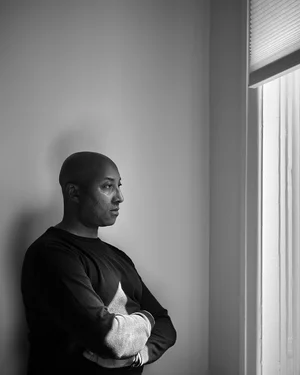
Through Each of Us, our photographic portrait and interview project, we place the individual at the centre. By inviting people to speak about their lives in their own words, we seek to reveal the experiences, ambitions and contradictions that resist easy categorisation. No single life should be expected to represent an entire community.
Our Montréal Black Language Survey (currently invitation-only) examines the city’s linguistic diversity and how language shapes identity, belonging, and our relationships with one another. It seeks to make visible the connections and differences often overlooked when diverse communities are treated as a single cultural or linguistic group.
Alongside these initiatives, Black Cartographies is a growing platform for ideas, cultural expression, criticism and contemporary debate. It also provides a home for my photographic and interdisciplinary practice, including The Ground Beneath Us: Black Cartographies of Montréal, a distinct research-creation project examining Black space, language, belonging and self-determination within the city.
We are interested in the ordinary as much as the extraordinary, in the pleasures and contradictions of everyday existence, and in perspectives that challenge established understandings of Black identity.
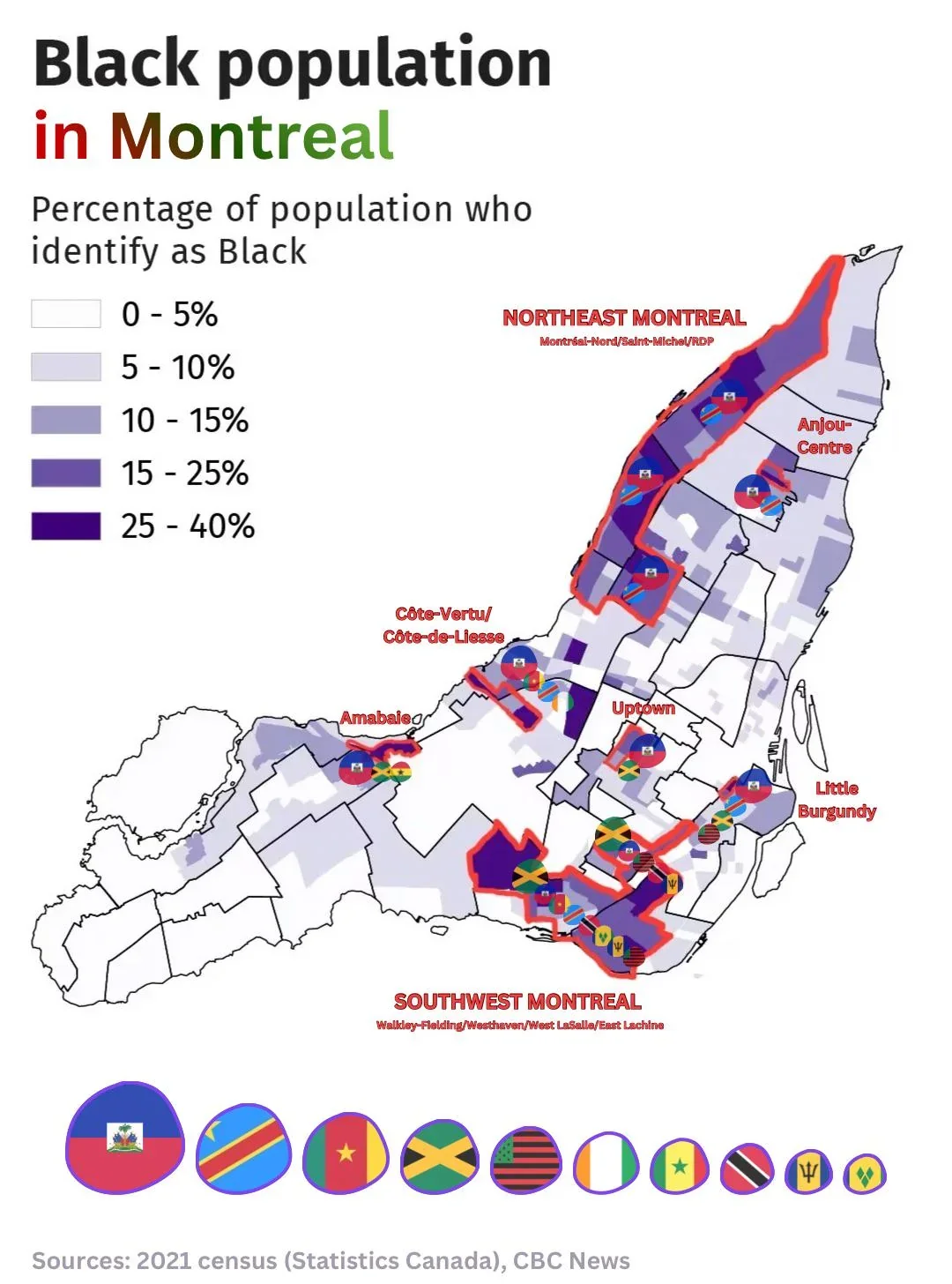
Black Cartographies seeks to give the almost 200,000 individual expressions of Black life in Montréal a home. At a time when histories, spaces and everyday experiences are too often marginalised or erased, recording presence becomes an act of recognition and a refusal of invisibility. But visibility alone is not enough. We seek to challenge society’s dominant fictions and the social, economic and institutional barriers that constrain individual lives, while expanding the possibilities of what Black life could become beyond those limitations.
Above all, Black Cartographies is an experiment. Its form and ambitions will evolve through participation, conversations and the changing world around us. Conceived as a five-year exploration, its development will be shaped by discovery, collaboration and the resources available to sustain it.
Through the accumulation of images, voices, memories and ideas, we hope to create more than an archive: a living record of Black presence, beginning in Montréal but extending beyond it. A trace of lives as they were lived, felt and imagined, connecting our present with those who are yet to come.